2026-11-12 ·
Hidden Water Damage Signs in Boca Raton Homes
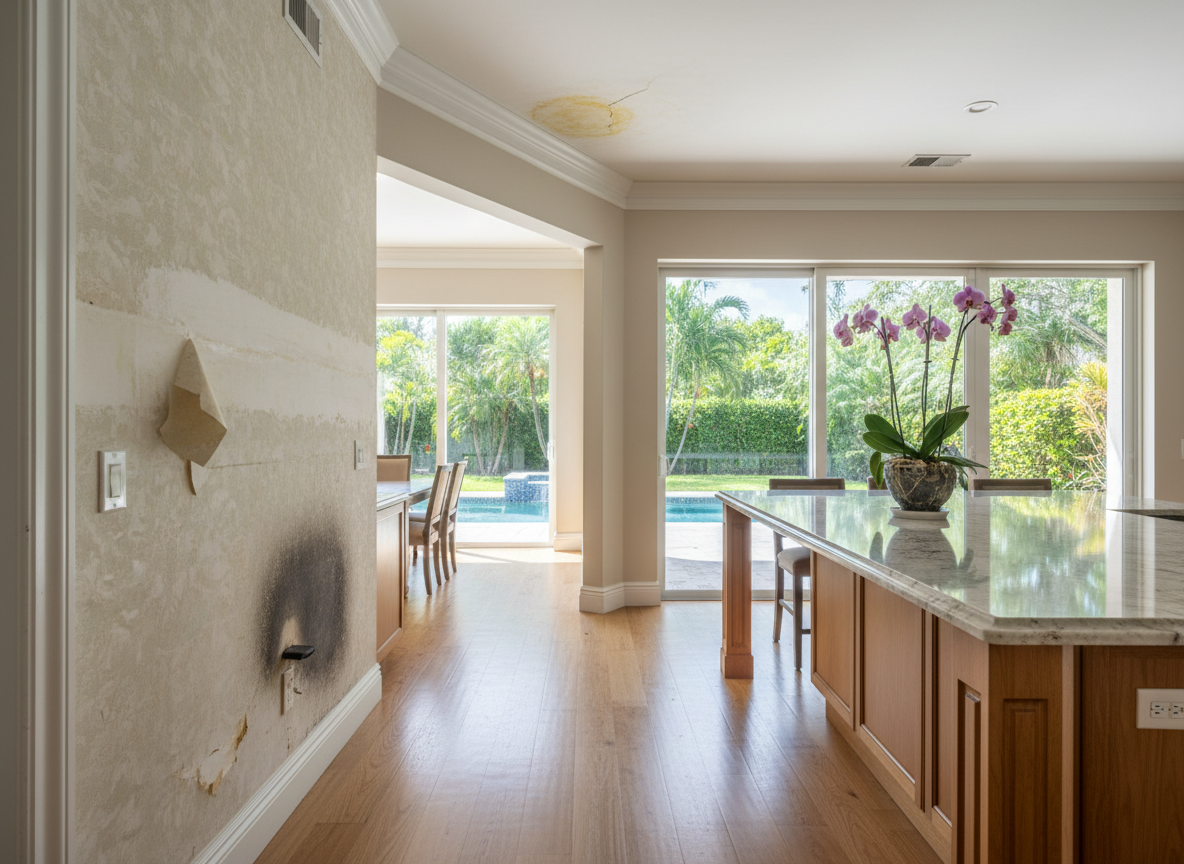
Water damage in a Boca Raton home is often not a flood on the floor. It is a slow drip from an AC line, a supply hose behind the washer or the condo above, and it stays out of sight until drywall, tile or cabinets start to show it. Here are the signs worth checking and where each one usually points.
Stains and bubbling paint on ceilings
A yellow or brown ring on a ceiling under an attic air handler usually means the condensate pan overflowed. In a condo, the same ring under a bathroom or kitchen upstairs points to the unit above. Bubbling or peeling paint on a ceiling means water is sitting in the drywall. Press gently: soft drywall should come down before it sags.
Tile that sounds hollow or lifts
Boca Raton homes sit on concrete slabs, and most living areas have tile. Water that runs under tile soaks the thinset and grout. Tap the floor near the kitchen sink, the dishwasher, the water heater closet and bathroom vanities. A hollow sound, cracked grout or a tile that rocks can mean water has been under it.
Swollen baseboards and cabinet toe-kicks
MDF baseboards and particleboard cabinet bases swell when they take on water, and they rarely shrink back. Look along the base of walls that back onto a bathroom, laundry or AC closet, and at the toe-kick under the kitchen sink and dishwasher. Swelling or flaking paint at the bottom edge is an early sign that is easy to miss.
Musty smells and mold spots
A musty smell in a closet or behind furniture means something is damp. Humid air keeps moisture in drywall longer, and the EPA says mold can begin growing on wet materials within 24 to 48 hours. Small dark spots at the base of a wall, inside a vanity or at the back of a closet are worth checking with a moisture meter.
The EPA suggests keeping indoor humidity below 60 percent, ideally between 30 and 50 percent. An inexpensive hygrometer shows where your home stands, and a room that reads high with the AC running is a room to inspect.
A water bill that jumps
If the water bill rises with no change in use, turn off every fixture and watch the meter. If the dial still moves, water is leaking somewhere, possibly under the slab. A slab leak on a hot water line can show up as a warm spot on the tile above it.
Window and slider leaks after storms
Wind-driven rain during tropical storms gets in around sliders and windows, especially on buildings that face the ocean. After a big storm, check each sill, the drywall below the window corners and the carpet tack strip. Dark staining at the bottom corners of a frame means water has been getting past the seal.
Where to look, room by room
- Kitchen: under the sink, behind the refrigerator at the ice maker line and around the dishwasher.
- Laundry: behind the washer at the hose connections and under the machine.
- AC closet or attic: the condensate pan, the drain line and the ceiling below.
- Garage: the floor and the base of the wall around the water heater.
- Bathrooms: the base of the toilet, the vanity floor and the wall behind the shower.
What it costs once water is found
HomeGuide's 2026 cost guide puts a minor leak in one area at $150 to $500 and a typical restoration job at $2,000 to $6,000. A mold inspection runs $300 to $650, and mold remediation runs $15 to $30 per square foot. Finding water early keeps the bill at the low end.
When to call
Call when you find soft drywall, hollow tile, a musty room or a ceiling stain that keeps growing. The restoration crew meters the area, finds how far the water traveled and gives a written estimate before any work starts. Damage that has dried but needs rebuilding falls under water damage repair, and Water Damage Categories and Classes Explained for Boca Raton Homeowners explains how the crew labels the job.